Kickstart your weight-loss journey now—with 6 months free!

3 science-backed tips for feeling more full

Learn how to make any meal or snack more satisfying.

By Rita Colorito|Scientifically reviewed by Kelli Richardson, Ph.D., RDN
Last updated October 6, 2025
3 science-backed tips for feeling more full

[{"type":"p","children":[{"text":""},{"type":"a","attributes":{"href":"/us/article/am-i-really-hungry","newWindow":false,"category":"","action":"","label":""},"children":[{"text":""}]},{"text":""}]}]

Ever notice that certain meals and snacks can keep you full for hours, while others leave you scrounging for something else to nibble not much later? Turns out, there’s more to feeling satisfied than just how much you eat — its nutritional makeup is also a major determinant of satiety, a.k.a. that contented feeling of fullness.

In general, we know that meals and snacks that have protein or fiber are more filling. Feeling satisfied between meals may be one way to support success on your weight-loss and health journey, says Heather Leidy, Ph.D., an associate professor at the University of Texas at Austin who specializes in nutrition sciences. Whether you're looking to shed pounds, maintain your weight, or simply fend off a case of the stomach grumbles, here’s how the foods you choose can make a difference.

Eat mindfully

No matter what you’re eating, your presence of mind can affect how satisfying a meal feels, Leidy says. Mindful eating, or being fully present during a meal or snack, can encourage people to appreciate a food’s presentation, flavor, aroma, and mouthfeel. Compared with people who eat while distracted, people who eat more mindfully tend to have a better sense of how much they’ve eaten and eat less overall.

Add some fiber

Unlike other carbohydrates, fiber doesn’t break down during digestion to provide energy for the body. Instead, this complex carb — found only in plant-based foods — creates filling bulk and supports a steadier, more sustained release of energy from other food components we eat. People who enjoy plenty of fiber-rich foods in their daily diet tend to have lower body weights than people who consume less of the nutrient.

Yet in the latest Dietary Guidelines for Americans, fiber was named among the most underconsumed nutrients in the U.S., with many adults falling well short of getting the recommended 22–34 g of fiber per day; the WeightWatchers app is an easy way to get personalized fiber recommendation and keep track of your intake.

Good sources of fiber include fruits, vegetables, legumes, whole grains and whole-grain foods (like oats or whole wheat pasta).

How to boost your intake of fiber and protein

Learn more about easy swaps to get more fiber and protein in your diet — or ideally, both at once.

Simple ways to get more protein

  • Top baked potatoes, bowls, or veggie hash with a poached, hard-boiled, or sunny-side-up egg.

  • Add powdered peanut or almond butter to breakfast cookies and energy bites.

  • Go for Greek yogurt. Whereas 1 cup of unstrained, plain, nonfat yogurt contains 14 g of protein, the same serving of plain Greek nonfat yogurt packs 23 g of protein.

  • Stash a bag of precooked shrimp in your freezer. The shrimp defrost in minutes and can be used in stir-fries, salads, pastas,and more.

  • Keep a variety of lean, precooked chicken sausages in your fridge or freezer. Thinly slice the links to make a savory topping for homemade pizza, or chop and add to quick-cooking soups.

Simple ways to get more fiber

  • Keep the peels on, since that’s where most of the fiber is found in potatoes, apples, and pears.

  • Add sautéed mushrooms, grated zucchini, or other veggies to turkey meatloaf and chicken burgers.

  • Stir handfuls of fresh baby spinach into pasta dishes and hearty soups.

  • Replace some added sugar in homemade baked goods or breakfast items with mashed banana, pumpkin purée, or shredded apple.

  • Choose air-popped popcorn over pretzels. Ounce for ounce, popcorn has approximately four times more fiber than standard pretzels.

Tips for getting more fiber and protein at once

  • Sub quinoa for rice in chicken soup and grain bowls. One cup of cooked quinoa contains 5 g of fiber and 8 g of protein; on the other hand, 1 cup of cooked white rice has less than 1 g of fiber and 4 g of protein.

  • Use hummus or black bean spread as a sandwich condiment.

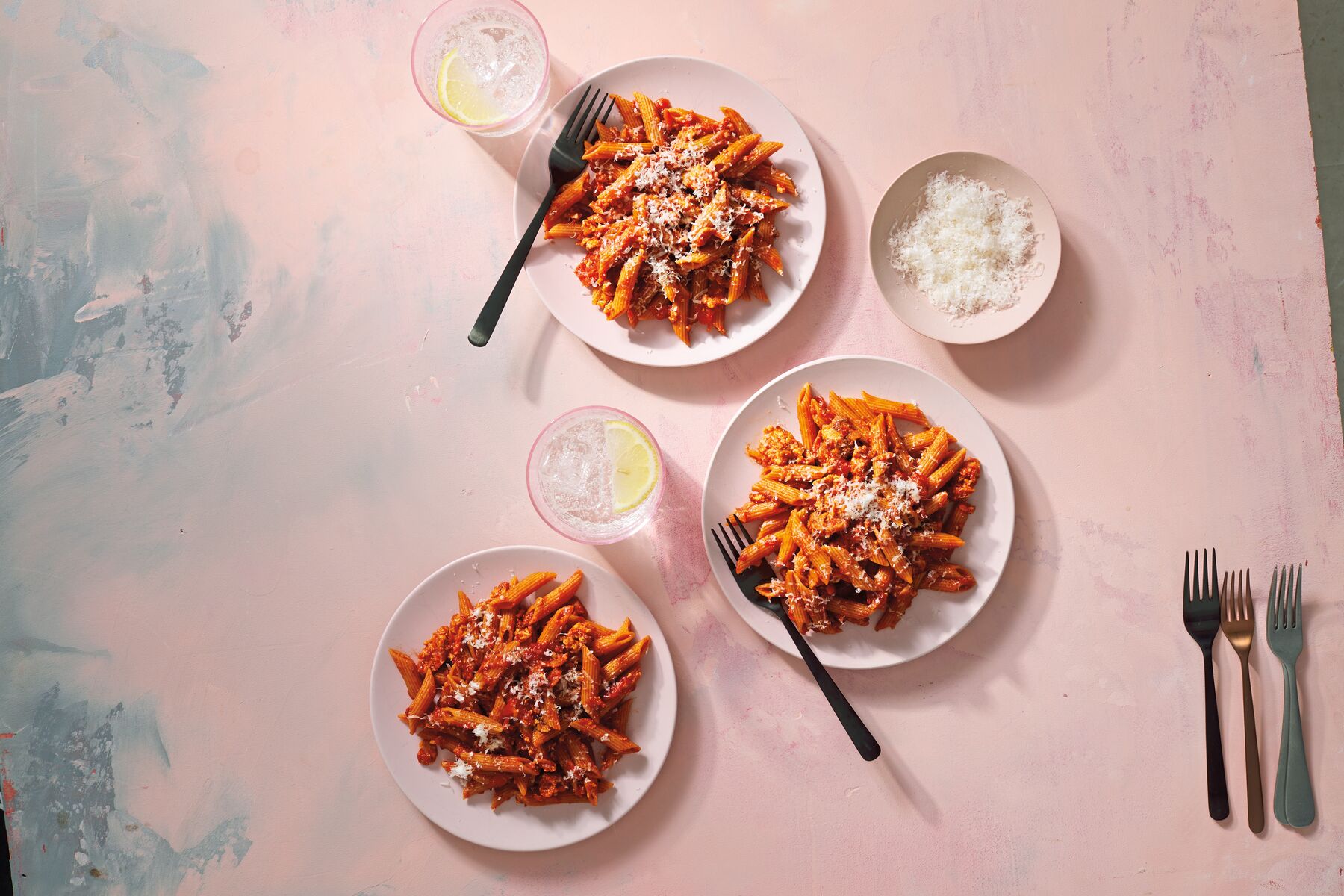
  • Give pasta dishes a vegetarian protein and fiber boost by stirring in some white beans or chickpeas.

  • Try mashed beans as a binder instead of breadcrumbs in vegan "crab" cakes and veggie fritters.

  • Sprinkle oatmeal with sliced or chopped almonds, walnuts, pistachios, or other nuts.

The bottom line

Feeling fuller for longer and more satisfied with our meals aren’t just good for weight loss — it’s also just convenient to not have to always feel hungry and on the prowl for a snack. Making sure you’re eating mindfully and choosing options with enough protein and fiber are great ways to keep feeling full and satisfied for longer after eating, so you’ll have energy for your day.

Related Articles

This content is for informational purposes only and does not constitute medical advice, diagnosis or treatment. It should not be regarded as a substitute for guidance from your healthcare provider.

Trust: You need this newsletter.

The field of weight management is evolving–and fast. New research. New treatments. Lots of misinformation. Our clinical newsletter helps sort it all out.